
Every material carries a history. Some materials carry entire experiences.
The Buffalo Trace Limited Edition began with an idea that fascinated us from the very beginning: what happens when a material that helped create flavor is asked to create sound?


Buffalo Trace bourbon barrels spend years in a constant exchange between wood, spirit, temperature, and time. During that process, the bourbon changes, but the wood changes as well. It absorbs. It releases. It expands. It contracts. It becomes an active participant in a transformation that leaves a permanent record within the material itself.
When these barrels arrived at Noble & Cooley, we were not interested in building another White Oak drum. White Oak drums already exist. What interested us was understanding how the history contained within a Buffalo Trace barrel could become part of a musical instrument.
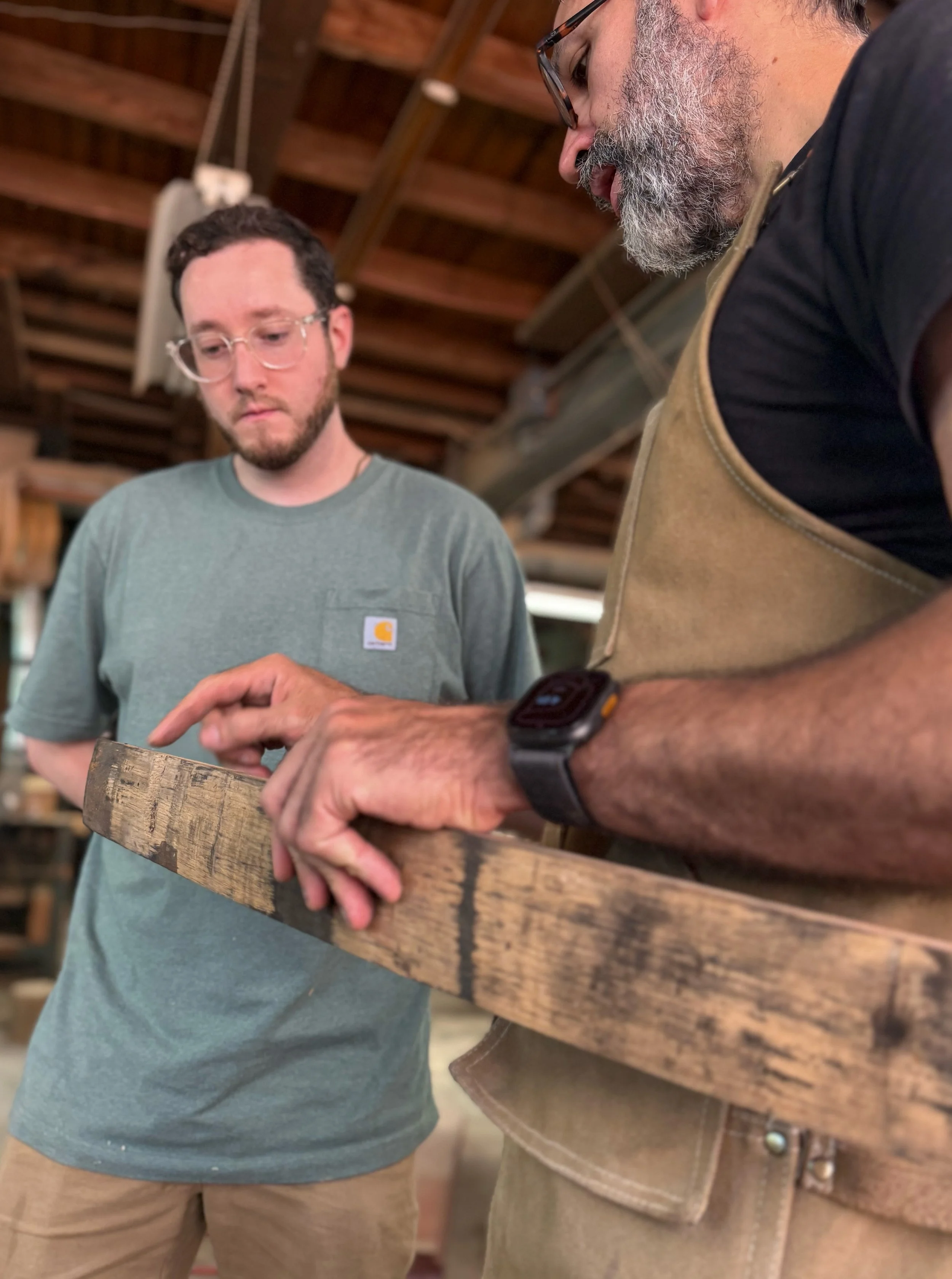
Each barrel is carefully dismantled and evaluated. Particular attention is given to the sections that show the deepest evidence of interaction between the bourbon and the wood. Those are the sections selected for the instrument, because they represent the most complete expression of the barrel’s history and character.
As the project developed, another idea became increasingly important: Human beings do not experience the world through isolated senses. We associate sounds with memories. We describe instruments as warm, sweet, rich, dry, aggressive, complex, or refined. Interestingly, master distillers often use remarkably similar language.
When people describe Buffalo Trace Bourbon, they speak about warmth, sweetness, depth, balance, complexity, spice, character, and a finish that continues revealing itself over time. Musicians often describe extraordinary instruments in much the same way.
That observation became one of the foundations of this project. Not because a drum should imitate a bourbon. But because both experiences pursue many of the same qualities: character, complexity, balance, depth, and emotional connection. The question then became how to build an instrument capable of expressing those qualities. The answer required solving an acoustic challenge and a structural challenge simultaneously.
Throughout the development of Buffalo Trace, structural and acoustic decisions were never treated as separate disciplines. Every structural decision was evaluated according to its acoustic consequences, and every acoustic objective had to be solved structurally.


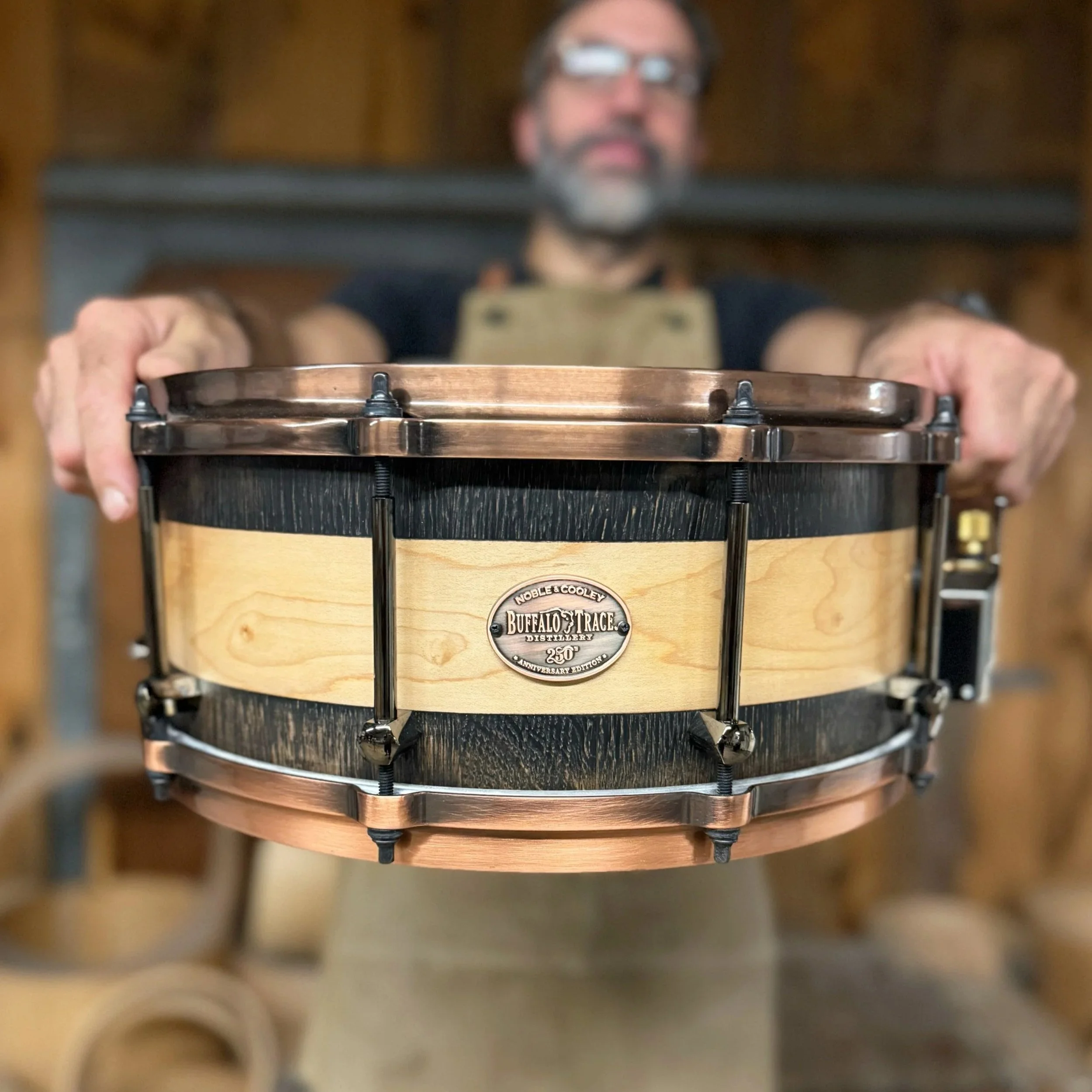
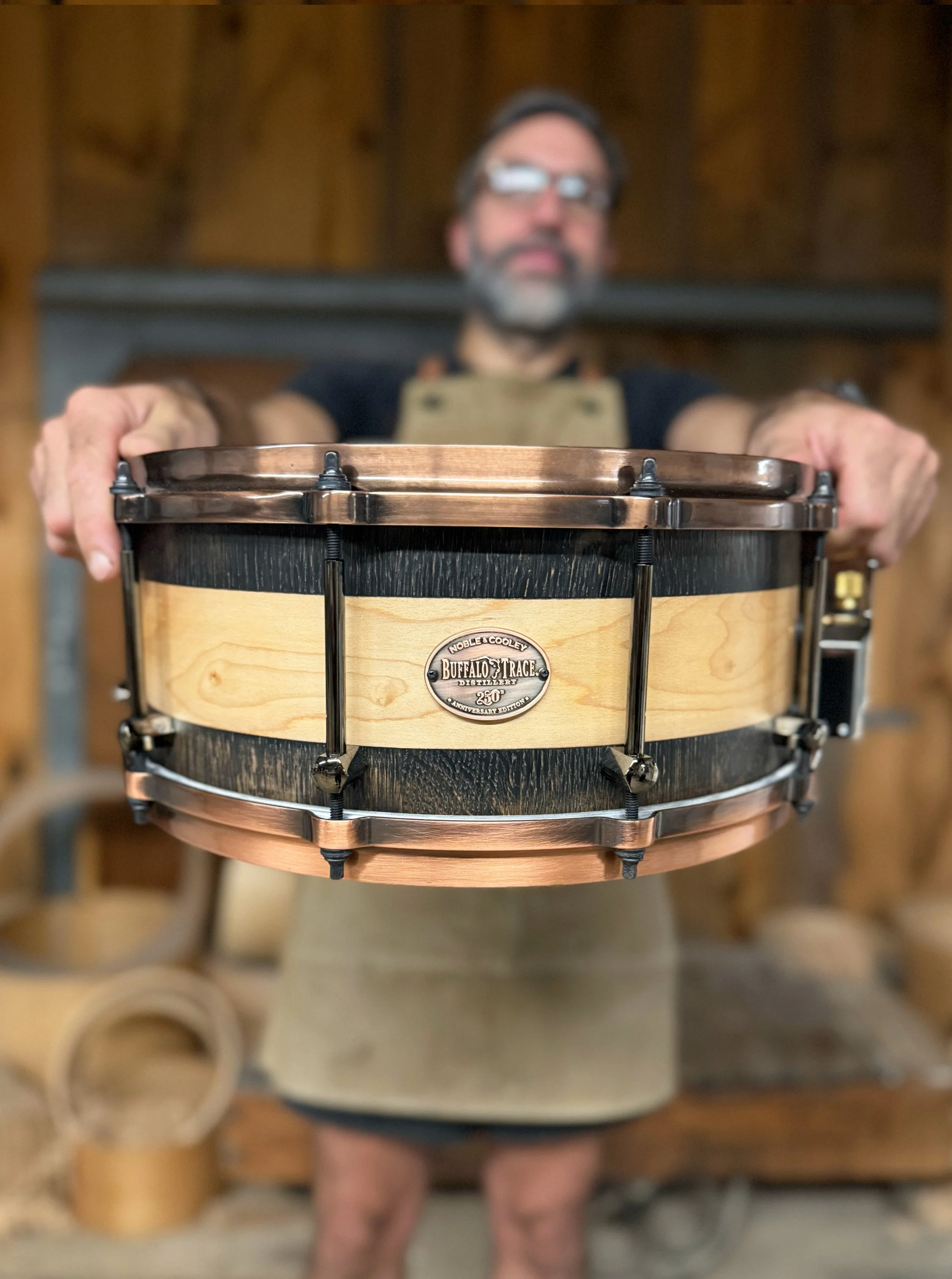
The foundation of the instrument is the Stave-Bent shell design developed by Ricardo Parra, combining vertical and horizontal grain structures within a single shell. The upper and lower sections are constructed from authentic Buffalo Trace barrel staves, while the center section is formed from a North American steam-bent maple shell. This configuration was chosen because each structure contributes something fundamentally different to the instrument’s response.
The vertically oriented barrel staves provide exceptional projection, articulation, sensitivity, and immediacy. The steam-bent maple center section contributes warmth, body, sustain, and harmonic complexity. The objective was not to choose between those qualities, but to unite them.
Achieving that balance required years of research into wood behavior, grain orientation, shell proportions, adhesives, joinery systems, vibration management, and long-term structural stability.
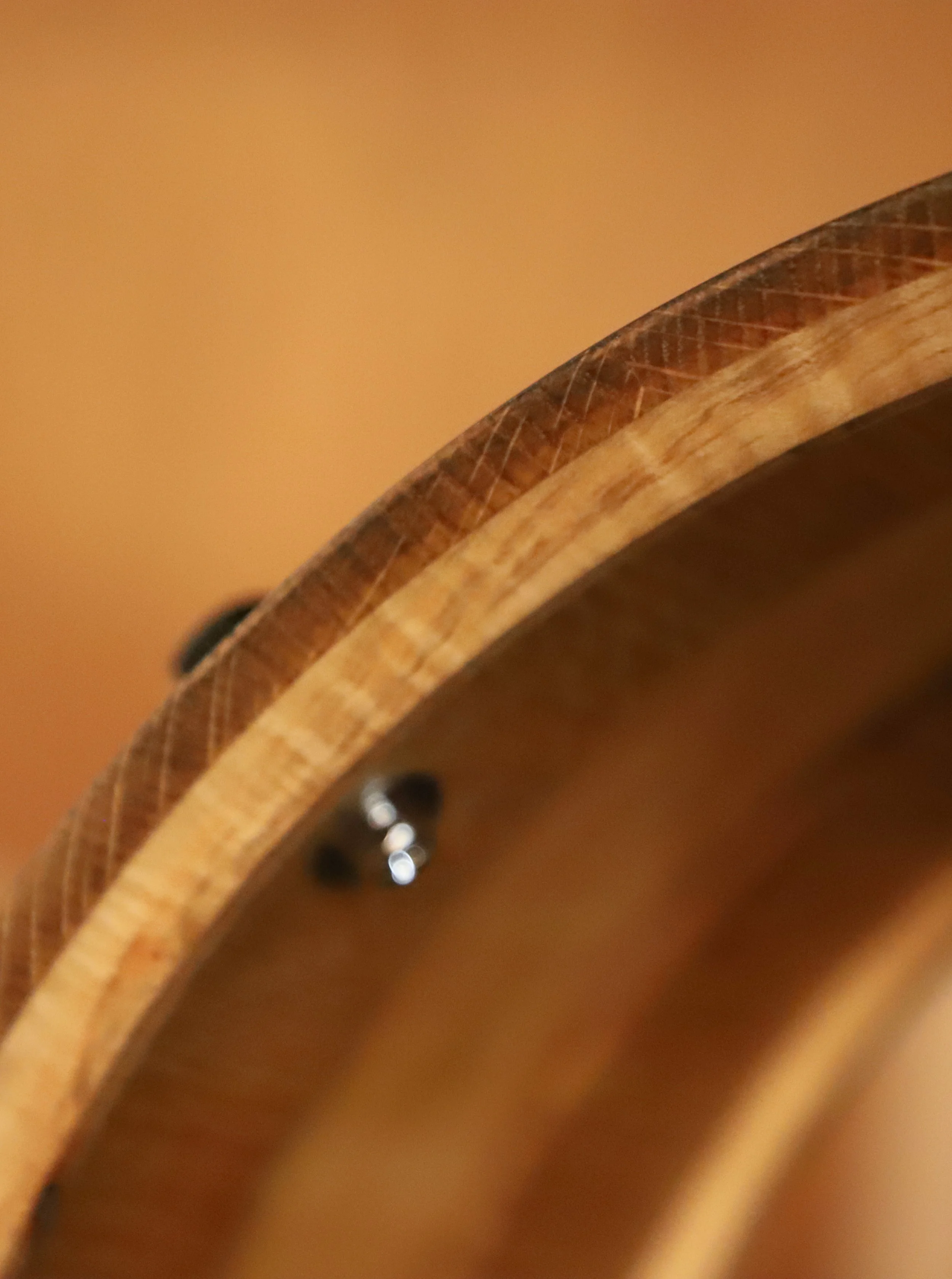
One of the most significant challenges was creating a seamless transition between the vertically oriented stave sections and the horizontally oriented steam-bent center shell while maintaining structural integrity and allowing vibrational energy to move freely throughout the instrument. That solution became one of the defining elements of the design: the Curly Maple reinforcement rings.
Curly Maple was chosen not for appearance alone, but because of the unique wave-like structure found within its grain. Unlike straight-grained wood, Curly Maple contains a complex three-dimensional fiber pattern capable of interacting with energy in multiple directions. This structure creates a natural bridge between the different grain orientations present within the shell.
Structurally, the reinforcement rings help integrate the entire shell into a cohesive and highly stable system. Acoustically, they help guide vibrational energy across those transitions, contributing to consistency, balance, harmonic development, and long-term reliability. They are not decorative elements. They are a fundamental part of why the design works.
The result is an instrument that combines the immediacy and projection of stave construction with the warmth, body, and complexity of a steam-bent shell. Its attack is crisp and articulate. Its response is immediate and sensitive. Its character continues to unfold long after the initial note. Like a great bourbon, it reveals itself in layers. The more deeply it is explored, the more it gives back.
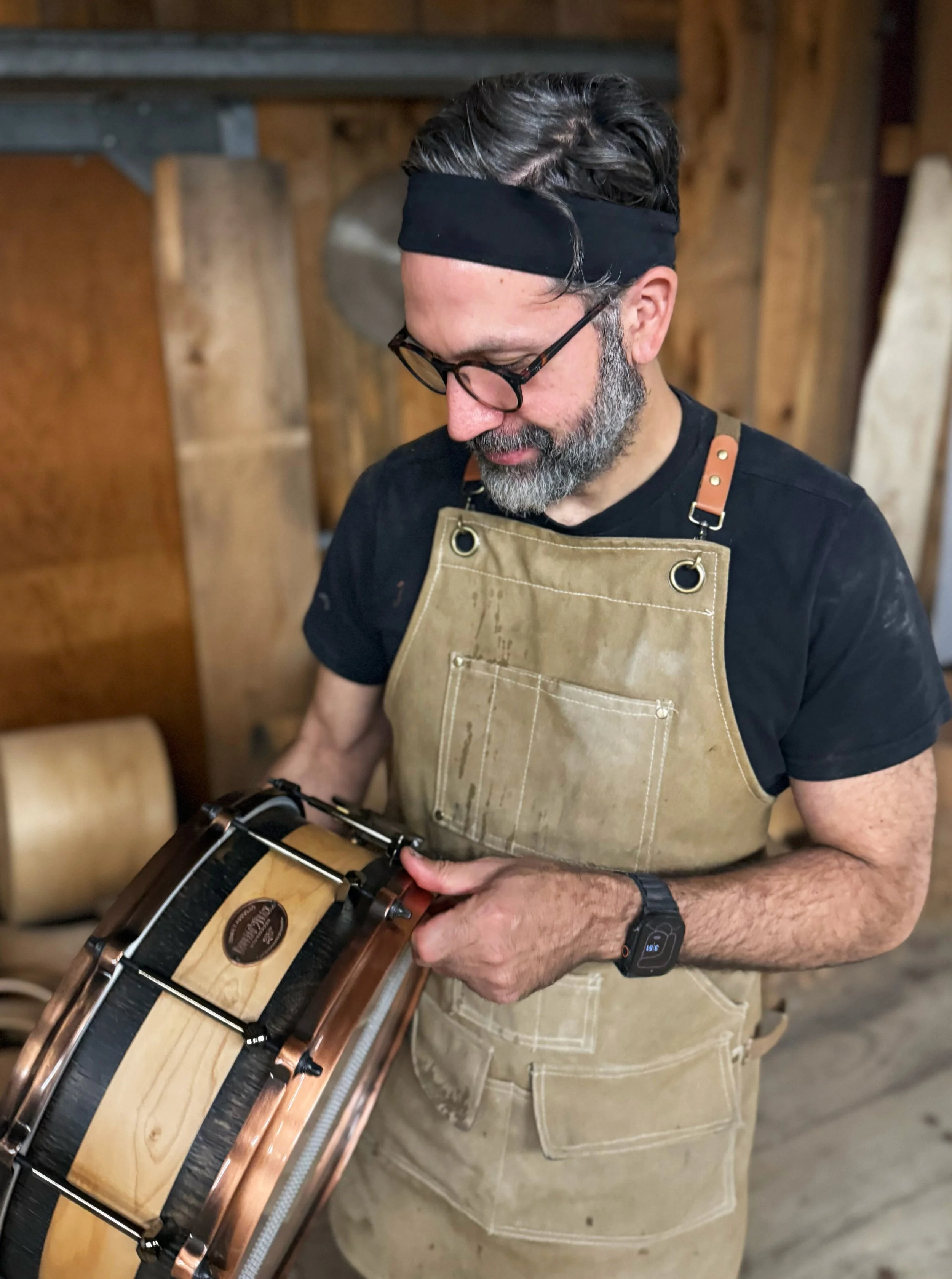
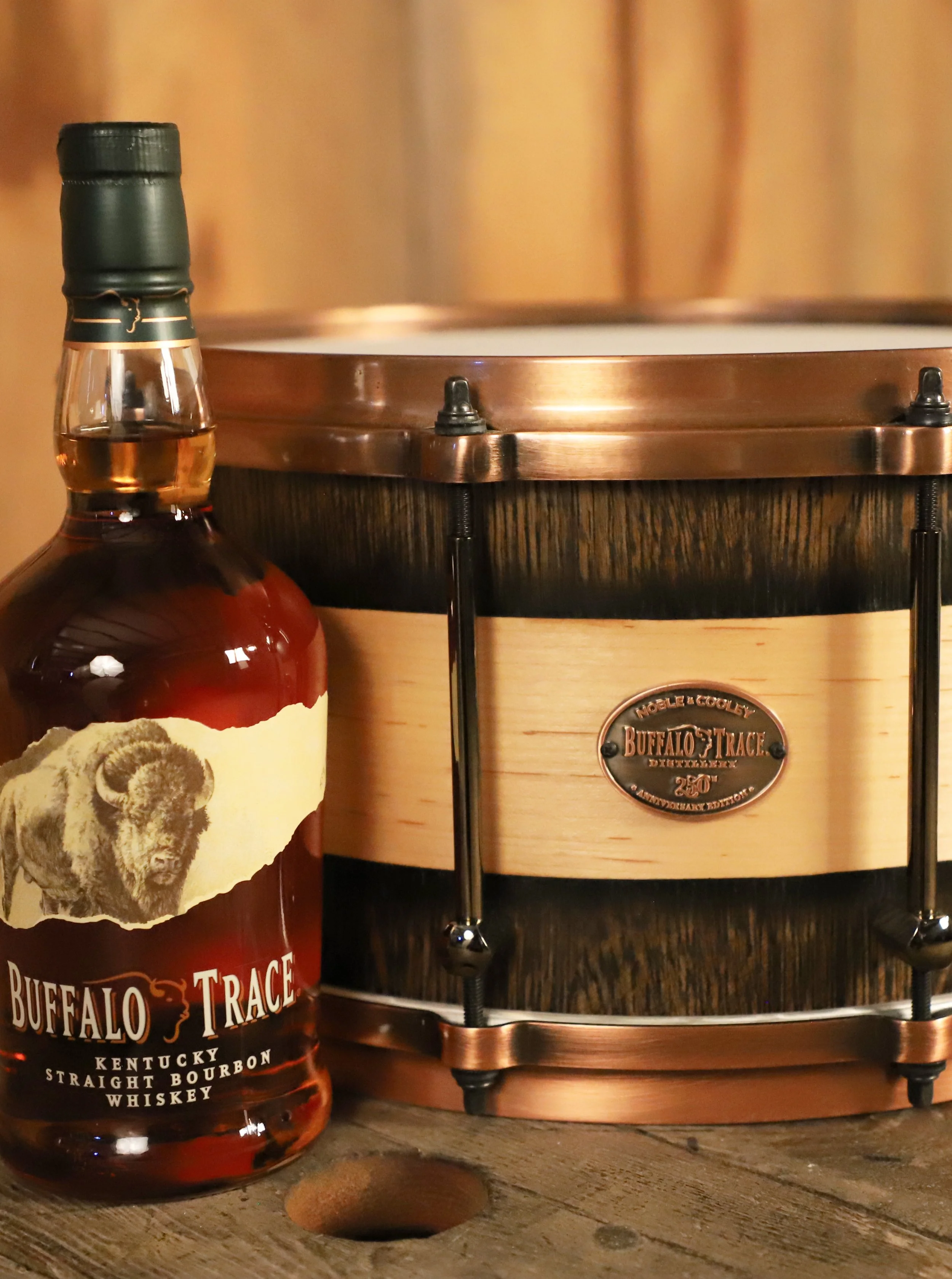
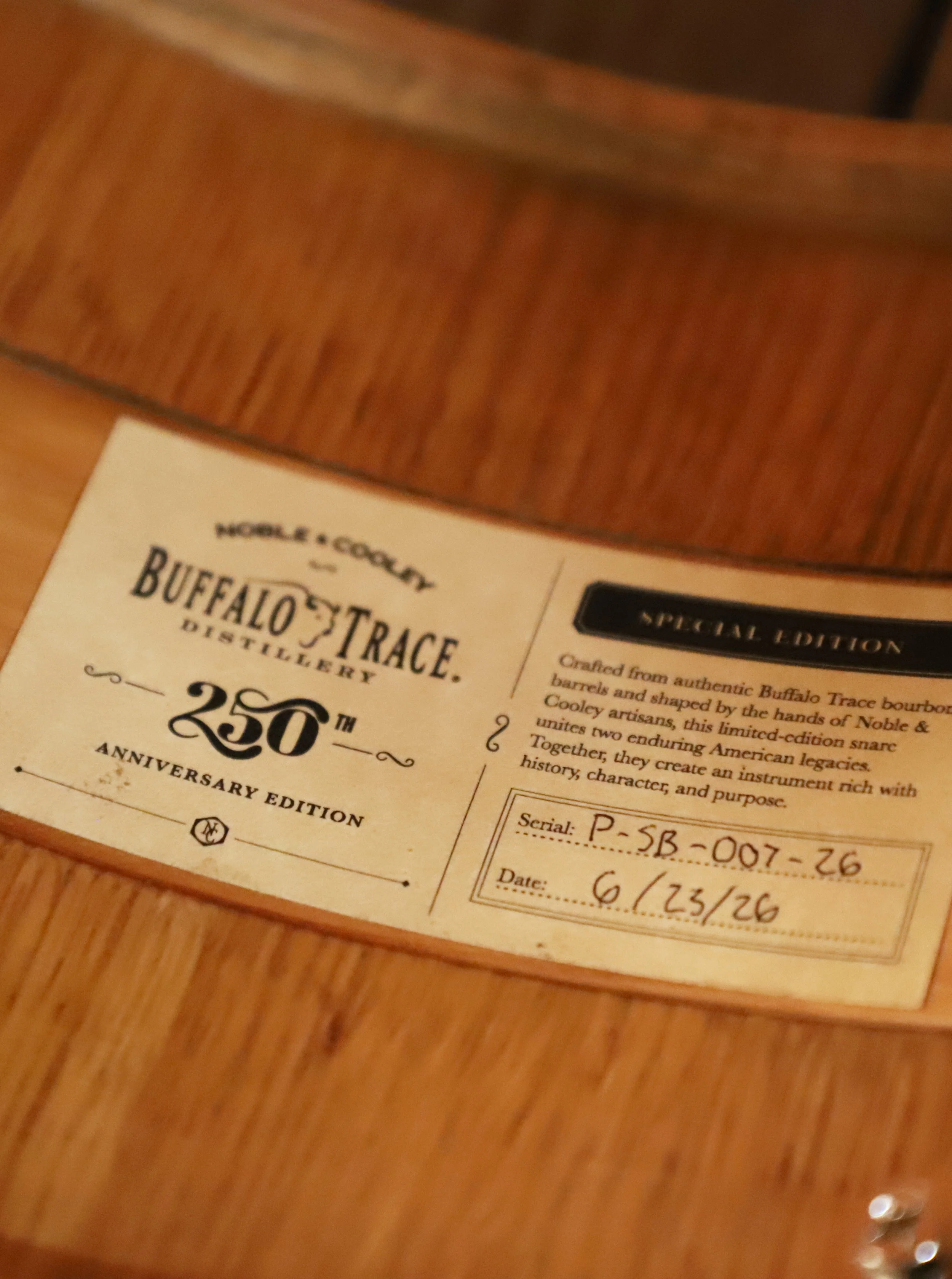
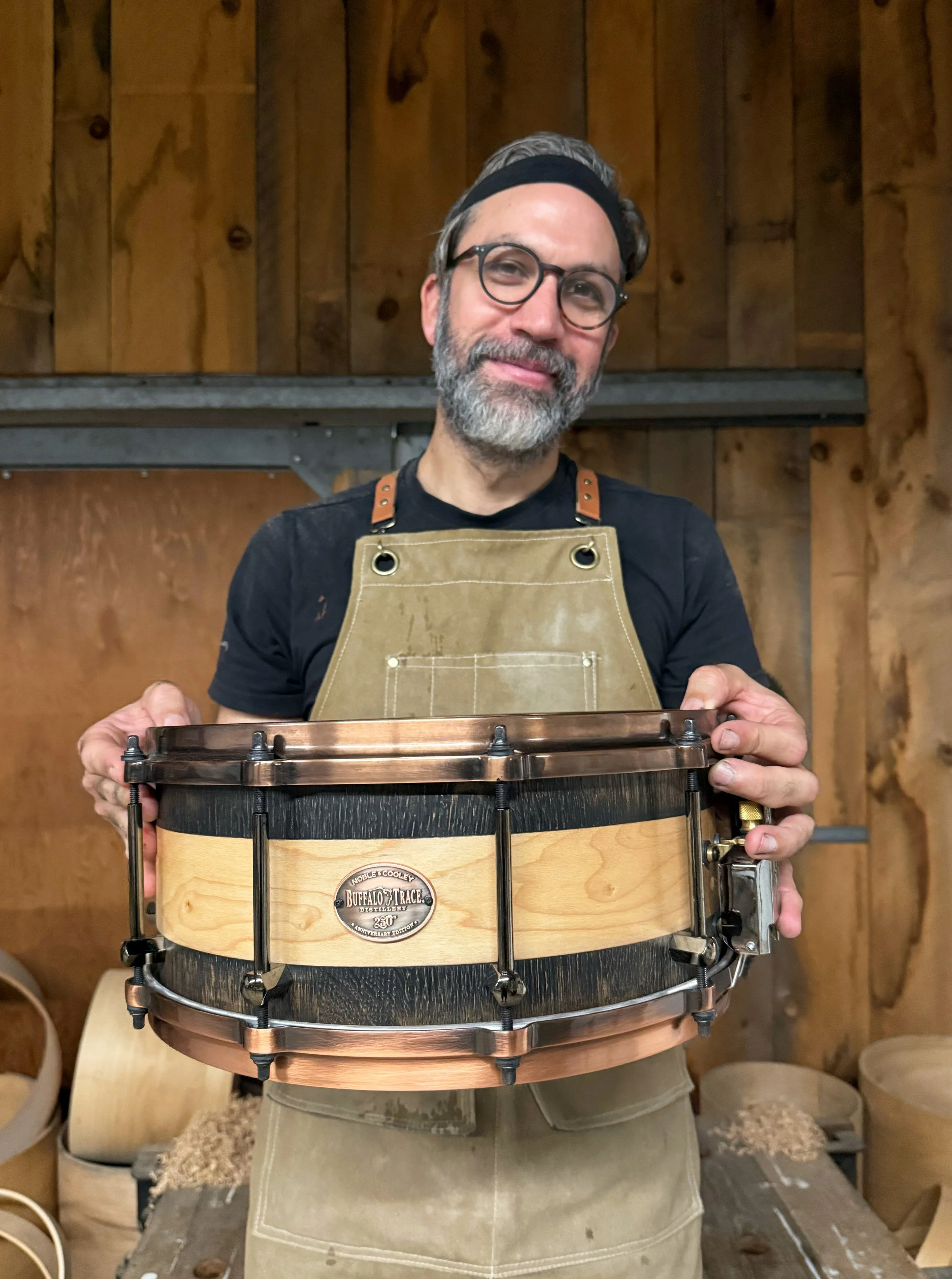
For the player, it offers exceptional expression and control. For the producer, it offers depth, texture, and remarkable tonal flexibility. For the collector, it preserves a material, a process, and a design that can never be recreated in exactly the same way.
Production is limited by the availability of authentic Buffalo Trace barrels. Each instrument begins with a material that can only exist in finite supply, making every drum part of a naturally limited edition.
What remains is the work itself. A design developed to solve a complex acoustic challenge. A material transformed by years of service. A meeting point between engineering, craftsmanship, sustainability, and musical expression.

The Buffalo Trace Limited Edition is not simply a drum built from a bourbon barrel. It is the result of understanding a material deeply enough to reveal what it was capable of becoming.
About Buffalo Trace:
More than 200 years ago, buffalo carved a pathway followed by American pioneers. The trail led to the banks of the Kentucky, where a world-class distillery and a flagship bourbon was born. Buffalo Trace defines what a bourbon should be. Aged nearly twice as long as competitors – in new charred oak barrels – and bottled at 90 proof, it’s the perfect bourbon to be enjoyed in any way, anywhere.
Buffalo Trace Oak staves go through their ’100 Year Process’ - 80 years of tree growth and 20 years of distilling - before moving onto have additional life, in this case, being part of a snare drum that will last forever.